Bike: Jamis Ventura A2 women’s road bike
First impressions of this bike were very positive– it wasn’t “technically” as nice as my previous bike (a 2007 Trek Madone), but riding a brand-new bike is unmatched! It was also a lot more comfortable for long-distance rides and was better suited for the terrain in terms of gears. But, at the end of the day this is a relatively cheap bike and it did have its problems. I got relatively lucky with mechanical issues but had some trouble with unreliable shifting and two bad chain lock-ups. You can read about the process of getting my bike here.
Saddle: Terry Liberator X
Finding a perfect saddle is tough, especially when you’ll be on your bike for hours on end and multiple days in a row. This one was not perfect, at least not for me. Terry has a great reputation for comfort and it’s definitely more comfortable than the stock seats that come with bikes (I once got a very ill-placed blister from a stock seat, not something I would wish on anyone) but I still had some major issues with saddle sores and had to shift around often.
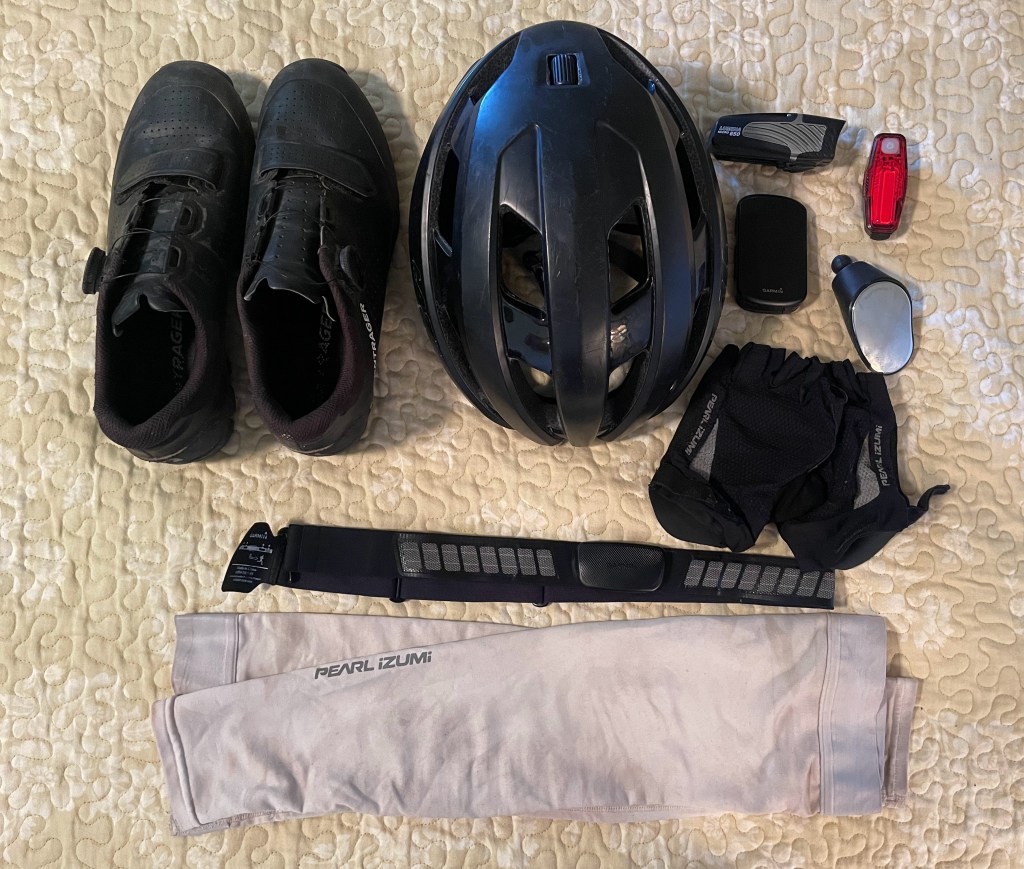
GPS/sensors: Garmin Edge 530 sensor bundle
This was a cherished birthday gift from my dad and he was kind enough to get me the sensor bundle which also includes a cadence, speed, and heart rate sensor to more accurately track my rides. This is definitely a big investment but if I had to pick just a few essentials for the trip this would be one of them. I loved knowing exactly where I was going each day and all the detailed stats it provided. I didn’t end up paying much attention at all to some of the metrics like cadence, but being able to monitor my heart rate was very helpful when I was recovering from COVID. The ClimbPro feature was at times bad for me mentally, but most of the time I preferred knowing what was ahead of me and could also motivate my teammates accordingly. I was also impressed by the crash detection features– thankfully I wasn’t hurt in my one crash, but if I had been alone and seriously injured my emergency contacts would have been notified immediately.
Water: Camelbak Hydrobak light hydration pack & Camelbak Podium Big Chill insulated water bottle (24 oz)
The hydration pack has a 1.5L reservoir and a roomy exterior pocket for stashing important things like snacks. It’s intended for cycling so it’s short enough that I can still access the pockets on the back of my jersey, has some reflective strips, and even has a well-placed loop for a rear light. Having the little tube right there made it so much easier to drink water on the go than grabbing a bottle every time I get thirsty. My first reservoir had a leak in it that got pretty bad in Colorado but I was able to borrow a spare one from Grace for the rest of the trip and it held up well. I initially planned to carry two of the Podium water bottles but decided to just bring one for sports drinks after getting the hydration pack. They’re nice bottles but the insulation is pretty average.
Lights: NiteRider Lumina micro 650 front/Sabre 110 rear set
This light set exceeded my initial expectations after my rear light flew off and shattered when I hit a bump the very first time I used it :( NiteRider has great customer service though and replaced it! I did end up buying a replacement in the meantime, though, so I had two rear lights… which meant I had to get a second front light to make it an even set! I went with the 850 lumen option simply because it was on sale at the time. The front Lumina lights are a lot brighter (and bulkier) than the rear Sabre lights but each have decent battery life and various brightness and strobe settings. I did find that the rear lights would die during the course of the day, especially toward the end of the trip (maybe as the battery health decreased?) but these were easy to charge each night.
Mirror: Sprintech dropbar mirror
Bike mirrors are tricky but I don’t have any real complaints about this one! I usually had to adjust it when I first got on the bike but it stayed in place after that, even on really bumpy roads. It’s quite small so you can’t see everything behind you, but I could usually see cars well in advance (especially if they had their headlights on). It got a little scratched and occasionally popped off, but not enough for me to lose or stop using it.
Cleats: Bontrager Foray mountain bike shoes + SPD cleats
I finally replaced the 7-year-old cleats I got before RAGBRAI with these Bontrager mountain bike shoes, a Christmas gift from my dad. The main improvement is the BOA strap system which is basically a ratchet dial to tighten the shoes. Mountain bike shoes are recommended over road shoes for a trip like this because the cleat is recessed a bit, so when you walk around you aren’t walking with the cleat on the ball of your foot hitting the ground. Walking around still isn’t very comfortable because the sole is so stiff, but it’s easier than walking around in road shoes. My feet got a little hot at times with the all-black but the ventilation was good on the move.
Helmet: Lazer Sphere MIPS
As someone who has always used a helmet from Target, I felt a little guilty putting this on my Christmas list. But, I figured top-rated protection for my brain would be a good investment for this trip! Although I didn’t end up putting this helmet to the test, Jack was wearing a Lazer helmet when he crashed on Day 9– the helmet was cracked in three places and he didn’t have a concussion!
A huge draw for this specific helmet was that it’s “ponytail friendly”, meaning the ratchet system in the back sits above your ponytail instead of having to thread it through an opening. It’s pretty revolutionary if you ask me. I don’t love the straps on this helmet (they’re hard to adjust and aren’t very comfortable) but I don’t have any other complaints.
Glasses: Rudy Project Keyblade photochromic glasses
These are very very pricey and I only have them because my dad wanted to buy a good pair of photochromic glasses and used me as a product tester. They worked better than the more affordable Tifosis I also tried in terms of ventilation and shade range. These aren’t my favorite in direct bright light but were unbeatable on cloudy days or rides with lots of light change. I used to get freaked out riding through darkly shaded stretches of road on otherwise sunny days because suddenly I couldn’t see anything without taking off my sunglasses entirely, but these adjust so quickly I hardly even notice anymore! Most of the time, though, I wore my more fashionable Goodr OGs or Suncloud low key polarized shades.
Sun sleeves: PEARL iZUMi sun sleeves
I wasn’t sure how often I would use these but they ended up being a necessity, especially in Utah– not so much for sun protection, but for cooling. There is no better feeling than soaking your sun sleeves (or filling them with ice) on a hot day! I also layered these under a light jacket for a little bit of warmth on chilly days. There were a few days I would’ve liked to have had arm warmers as well, but most of the time I was fine with these and a jacket.
Gloves: PEARL iZUMi gel elite gloves
These are definitely up to personal preference, but I appreciate the extra padding while riding and protection in case of falls.
Leg warmers: PEARL iZUMi Elite Thermal leg warmers
I didn’t end up wearing these on the trip, but there were at least two days where I should have. I did wear them once before the trip– after a very bad first impression I got a pair that fit properly (the size chart is weird and mediums were wayyyy too big) and ended up liking them a little more, but they did make me feel a bit like a stuffed sausage. They’re good for chilly early morning starts when you can take them off later on, but not great if you’re going to wear them for an entire day of riding.
Rain jacket: REI Co-op Active Pursuits cycling jacket
I deliberated over this one for months. I wanted something waterproof and lightweight that would pack down small, had a hood, and ideally a rear pocket. Ultimately I settled on this, which doesn’t have a rear pocket but was otherwise what I was looking for, and somewhat affordable. If you’re riding in the rain it’s difficult to stay dry but this did a decent job and provided some warmth on cooler days. I kept it in my backpack most of the time, but if I wanted to carry it on my bike it fit nicely in my jersey pocket when I rolled it up and secured it with a velcro strap. My main complaint is that my rear tire kicked up a lot of dirt onto my back when we biked around Lake Tahoe and it didn’t wash out.
Bags: Topeak Wedge drybag (medium) & Orucase Smuggler handlebar bag

Both bags are waterproof so I didn’t have to worry too much about riding in the rain (although both did end up letting in some moisture at times). Between these two bags, my Camelbak, and my jersey pockets, I usually carried the following:
- Spare tubes
- Tire levers
- Multi-tool
- Velcro straps
- CO2 cartridges to inflate flats
- Pressure gauge
- Chain quick-link
- Patch kit
- Emergency snacks
- Portable charger
- Small bottle of sunscreen and a face stick
- Tissues
- SPF chapstick
- Eye drops
- Chamois butt’r packets
- Hand sanitizer
- Phone with wallet case to carry cash, ID, and credit card
- Rain jacket and sun sleeves, as needed
I didn’t end up using some of those things at all, but I liked to be prepared. What if I got a flat and couldn’t contact the van and needed to repair my tube and also not burn to a crisp in the meantime???
 Lauren Bikes America